For decades, education has relied on two-dimensional media to teach concepts that exist in three dimensions. Students learn about the solar system from diagrams, study anatomy from textbook illustrations, and explore historical sites through photographs. While these methods have served their purpose, they leave a fundamental gap between understanding and experience.
Spatial learning changes this dynamic entirely. By placing students inside immersive 3D environments, spatial learning leverages the brain's natural ability to process and retain information through physical space. Research consistently shows that students who learn in spatial environments demonstrate 75% higher retention rates compared to traditional methods.
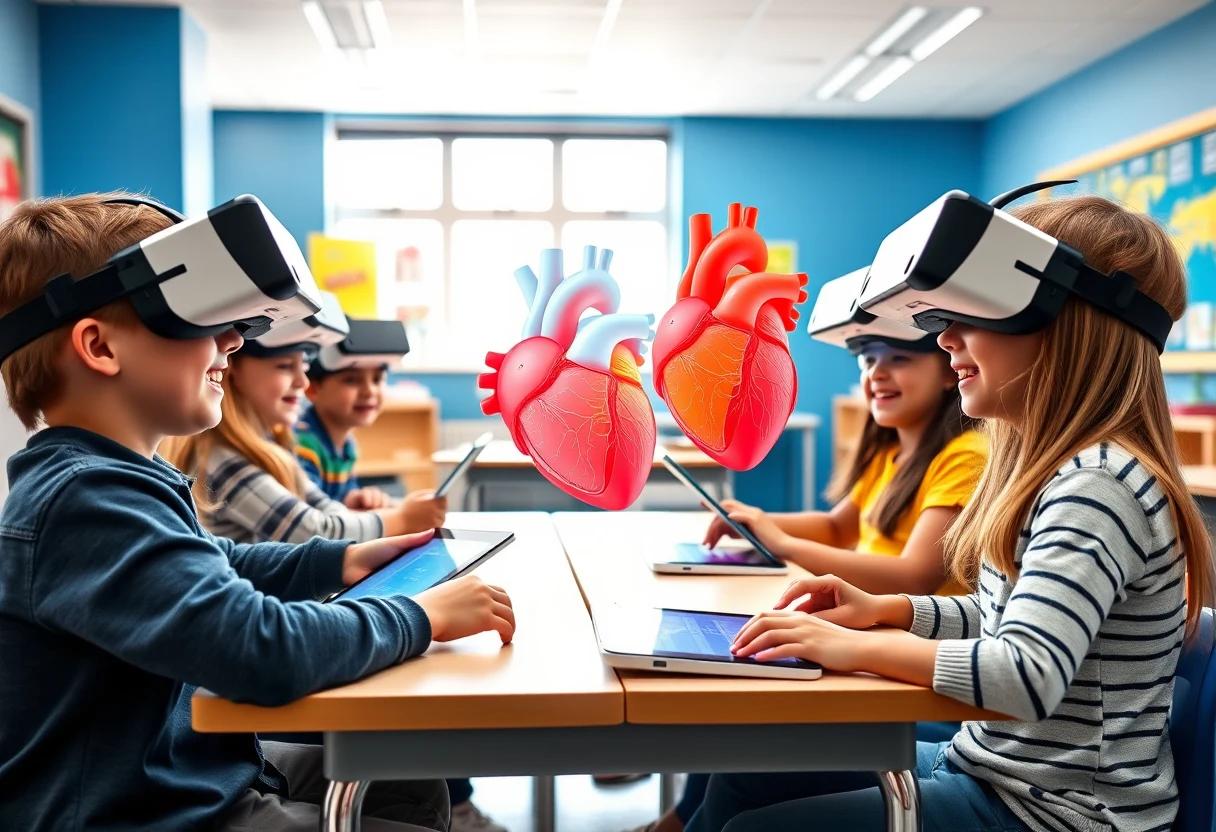
The implications for K-12 education are profound. When a fifth-grader can walk through a beating heart, or a high school chemistry student can manipulate molecular structures with their hands, abstract concepts become tangible experiences. This is not about replacing teachers — it is about giving them a powerful new tool.
Early adopters are already seeing remarkable results. Schools using spatial learning platforms report increased student engagement across all demographics, with particularly strong gains among students who traditionally struggle in lecture-based environments. Visual and kinesthetic learners, who make up roughly 65% of the population, benefit the most from this shift.
As VR hardware costs continue to drop and WebXR technology makes spatial experiences accessible on any device, the barriers to adoption are disappearing. The question is no longer whether spatial learning will transform education, but how quickly schools can integrate it into their curriculum.